


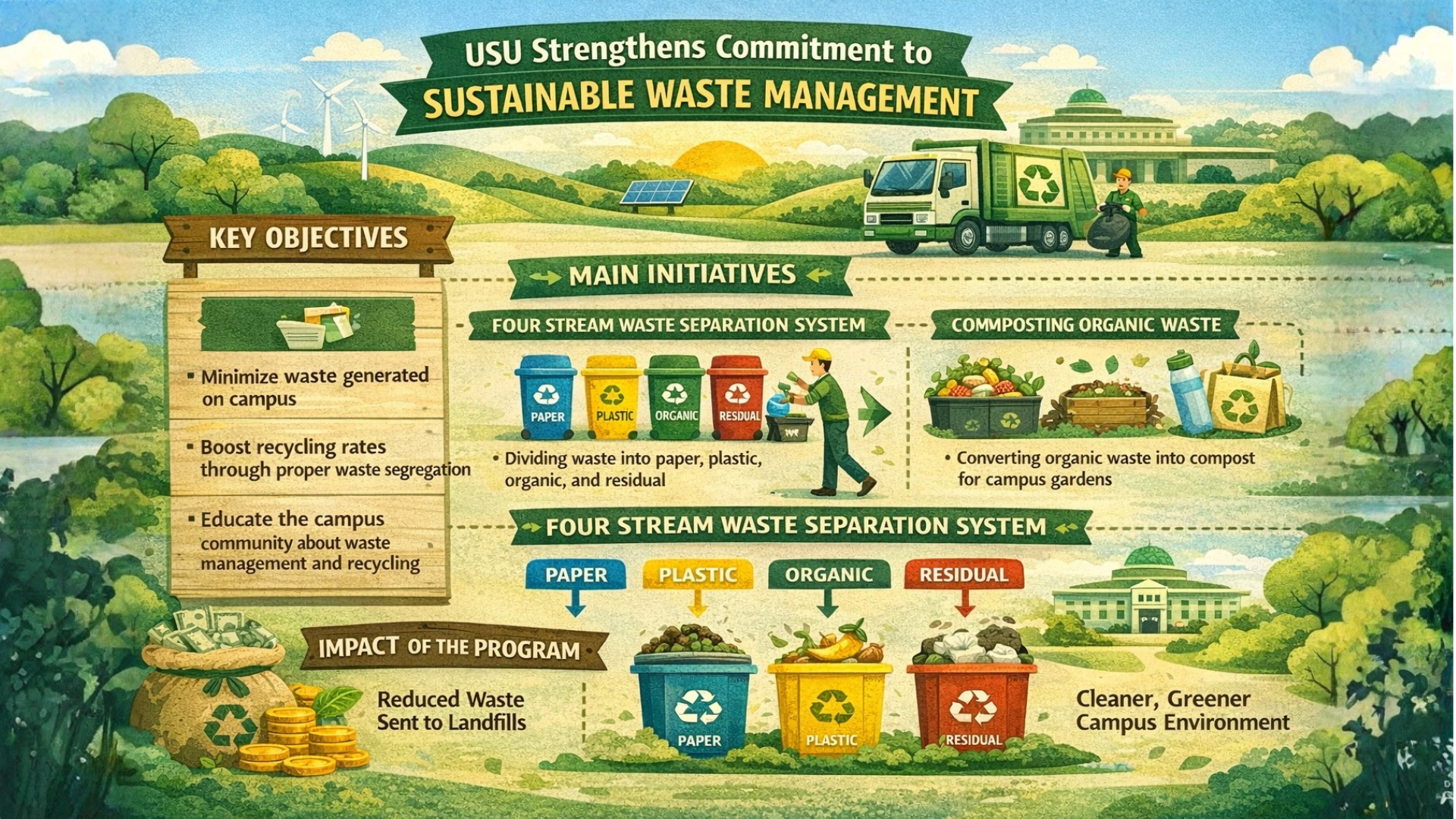
A key milestone in this effort was the establishment of a Temporary Waste Processing Facility (Tempat Pengolahan Sampah Terpadu – TPST), developed in collaboration with the North Sumatra Provincial Government, which supports the implementation of a zero-waste campus initiative. This facility applies circular economy principles by transforming organic waste into compost and maggot-based feed, while plastic waste is processed using technologies such as pyrolysis to produce alternative fuel.
The waste management system is also supported by source-level waste segregation across faculties, encouraging students and staff to actively participate in sorting organic, inorganic, and residual waste. In addition, the TPST functions as a living laboratory, providing opportunities for students and researchers to develop innovative waste management solutions. With a processing capacity of approximately 250–300 kilograms of waste per day, the initiative significantly reduces the volume of waste sent to landfills.
Further information on this initiative can be accessed through the following sources: https://sumut.antaranews.com/berita/635077/mengolah-sampah-menumbuhkan-harapan-tpst-usu-bangun-gerakan-zero-waste-dari-kampus and https://sdgs.usu.ac.id/id/berita/usu-bersama-pemprov-sumut-resmikan-tempat-pengolahan-sampah-terpadu.
Universitas Sumatera Utara (USU) has expanded its sustainability efforts beyond waste management by promoting healthy food initiatives as part of its broader green campus and healthy campus policies. In addition to implementing an integrated waste management system, USU ensures that the availability of nutritious and affordable food becomes a key component of campus life.
Through various campus canteens and food services, the university provides balanced meal options that prioritize hygiene, nutrition, and sustainability. USU also encourages the consumption of healthier food choices, including plant-based and locally sourced ingredients, as part of its commitment to supporting both environmental sustainability and community well-being. These initiatives are designed not only to improve the dietary habits of students and staff but also to reduce the environmental footprint of food production and consumption. By integrating healthy eating practices with sustainability principles, USU demonstrates a holistic approach in creating a campus environment that is both environmentally responsible and supportive of public health. This research explores how Batak Toba food terms are formed, reflecting cultural values through linguistic techniques such as composition, reduplication, and affixation.
https://konten.usu.ac.id/storage/satker/L06MZ/statis/mitra/Evidence%2012.2.1.pdf