


Medan, Indonesia — Universitas Sumatera Utara (USU) is strengthening its commitment to campus safety and environmental protection through a comprehensive, science-based hazardous waste management system. This system is guided by Rector’s Regulation (Pertor) No. 3 of 2019 on the Implementation of the Green Campus Movement and reinforced by Circular Letter No. 1 of 2023 on Environmental Management and USU’s Commitment to Becoming a Green, Sustainable, and Carbon-Neutral Campus by 2029.
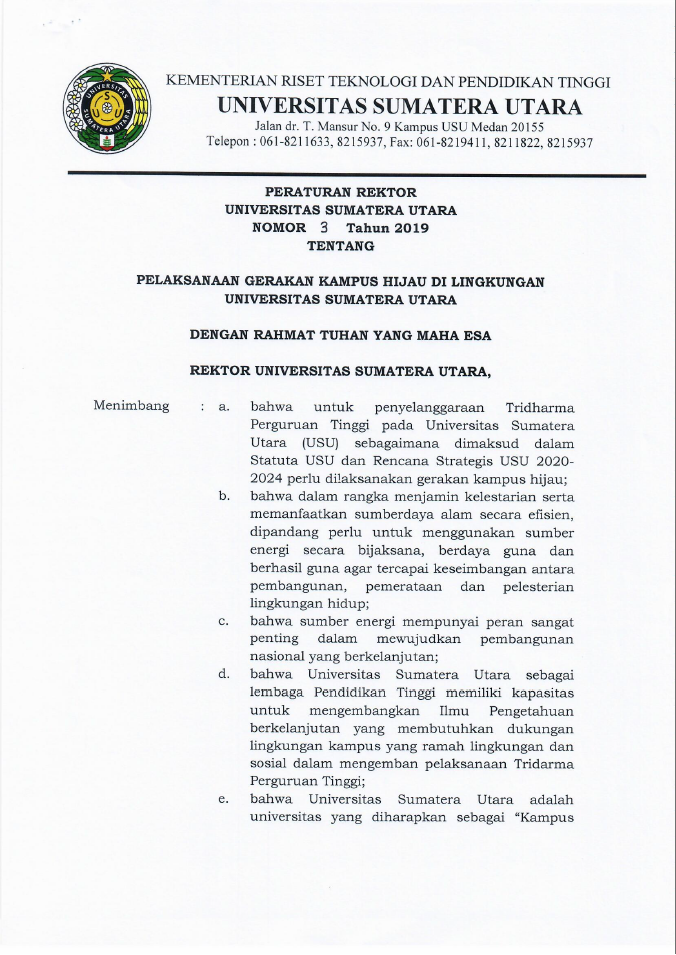
Rector’s Regulation No. 3 of 2019 on the Implementation of the Green Campus Movement
These regulations form the core of USU’s waste management policy, including specific provisions for hazardous materials (Bahan Berbahaya dan Beracun (B3)). They emphasise the prevention of hazardous releases to the environment and require proper labelling, secure storage, and safe handling by trained and certified personnel in all faculties, laboratories, and hospitals.
A Science-Based Framework for Campus Safety and Environmental Protection
.png)
USU Rector Muryanto Amin visits the B3 waste processing facility of PT Sumatera Deli Lestari Indah to support the development of university policies on sustainable waste management.
Chapter III of Pertor No. 3/2019 sets out detailed obligations for the management of hazardous waste and B3 materials. Under this framework, every stage of hazardous waste handling at USU is regulated, including:
- Generation and segregation at source
- Labelling and documentation using Material Safety Data Sheets (MSDS)
- Temporary storage in dedicated B3 facilities
- Transportation by licensed third parties
- Environmentally sound final disposal in line with national law
This institutional framework is further strengthened by Circular No. 1/2023, which integrates hazardous waste reduction into USU’s broader environmental strategy and its target of becoming carbon neutral by 2029. Together, these policies ensure that waste disposal and hazardous material management are not just operational procedures, but formal institutional commitments to safety and sustainability.
A Closed-Loop System: From Waste Generation to Safe Disposal
Hazardous waste at USU is generated mainly by hospitals, laboratories, and research facilities. To ensure full containment and control, USU has established Temporary Hazardous Waste Storage Facilities (Tempat Penyimpanan Sementara Limbah B3) at three key locations:
- RS USU (University Hospital)
- USU Dental and Oral Hospital
Faculty of Medicine Microbiology Laboratory
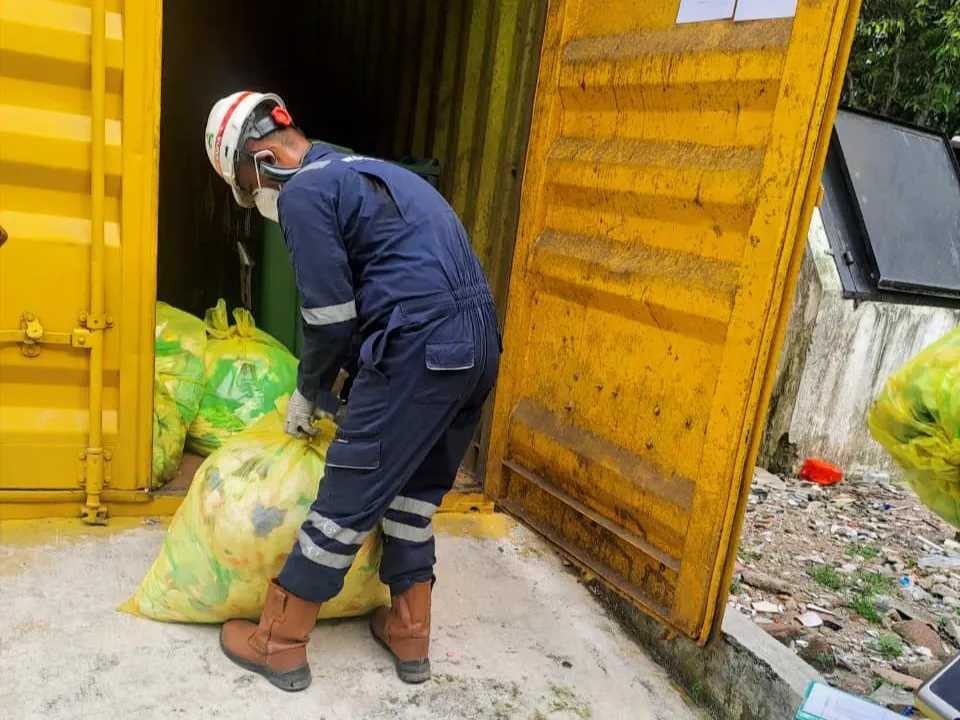 Each facility operates under a Standard Operating Procedure (SOP) that includes:
- Segregation of waste according to type and risk
- Accurate labelling and inventory records
- Cold storage between +2°C and 0°C to limit contamination and pathogen growth
- Regular inspections by the Environmental Health and Safety Unit
The USU Hospital manages approximately 3.76 tons of medical and infectious waste per month, while laboratories across multiple faculties generate around 3.38 tons of chemical and pharmaceutical waste each month.
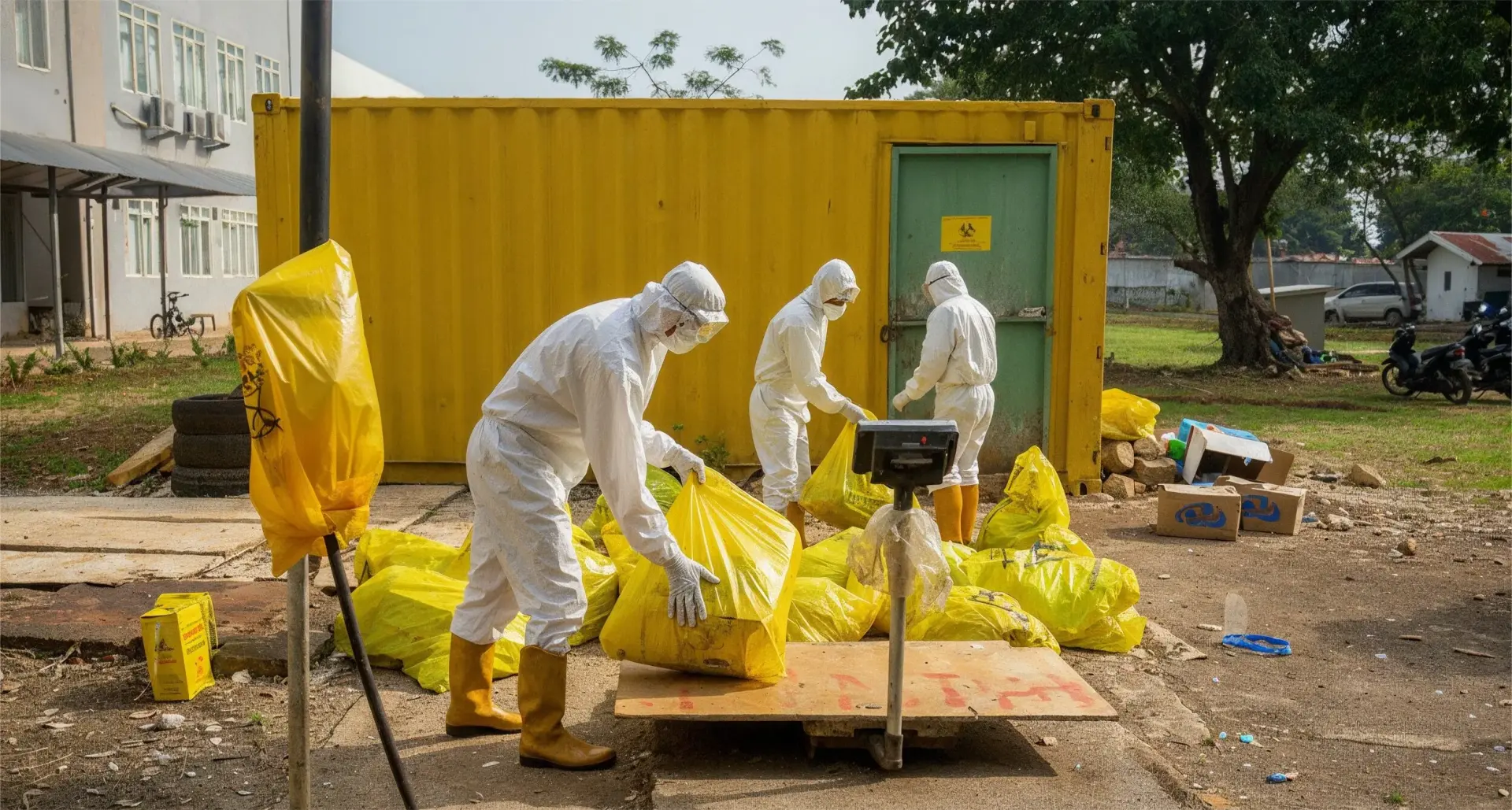
All hazardous waste is collected and transported by a certified third-party company, PT Sumatra Deli Lestari Indah (SDLI), under a formal Memorandum of Understanding (No. 825/UN5.1.R/KPM/2021). This ensures that final treatment and disposal are traceable, legally compliant, and carried out using environmentally sound methods, in accordance with Indonesian regulations.
Technological Innovation in Waste Processing and Reduction
In addition to containment and safe disposal of B3 waste, USU integrates technological innovation to minimise non-hazardous waste and reduce the volume of material sent to landfills.
At the Integrated Waste Processing Site (TPST) on Jalan Pintu 4, USU operates a three-process system that includes:
- Pyrolysis: With technical support from Earthwise Consulting Japan, plastic waste is converted into reusable fuel oil. The system can produce up to 20 litres of fuel from 20 kilograms of plastic, contributing to a campus-scale circular economy model.
- Incineration: Developed by Dr. Eng. Hafizhul Khair and team, the incinerator treats non-recyclable residues and is equipped with an air pollution control system using a cyclone scrubber to reduce emissions.
- Maggot cultivation: Organic waste, particularly food scraps, is processed through black soldier fly (BSF) maggot cultivation, converting waste into high-protein feed for aquaponics and other agricultural uses.
These technologies illustrate how scientific research and engineering are applied to support USU’s vision of a closed-loop waste system, moving from hazardous containment to energy recovery and material regeneration.
Data-Driven Governance and Smart Waste Monitoring
USU is complementing its physical infrastructure with ICT-based monitoring to improve the transparency and efficiency of waste management. Under the 2024–2025 Research Team Assignment (SK No. 3046/UN5.1.R/SK/KPM/2024), the university is developing a real-time tracking and analytics platform to monitor waste movement from source to treatment.
Key features include:
- RFID tagging to track hazardous and non-hazardous waste streams
- Digital dashboards that visualise volumes, types, and treatment routes
- Data integration to improve decision-making and emergency responses
This smart monitoring system reflects USU’s broader commitment to digital transformation and data-driven sustainability governance, linking environmental, safety, and operational systems in one integrated framework.
Ethical Policy and Sustainable Vision
By placing hazardous waste management within its Green Campus Policy, USU directly supports Sustainable Development Goal 12 (Responsible Consumption and Production). The university’s approach ensures that:
- Hazardous waste (B3) is strictly controlled from source to final disposal
- Policies and Circulars (Rector’s Regulation No. 3/2019 and Circular Letter No. 1/2023) provide a clear ethical and legal basis for action
- Prevention of environmental contamination is treated as an institutional obligation, not an optional initiative
These measures align with the institutional statement that “USU has a comprehensive policy on waste management, including hazardous materials”, with explicit rules on labelling, storage, handling by certified personnel, and the prevention of hazardous releases into the environment.
Through policy enforcement, technological innovation, and cross-sector collaboration, Universitas Sumatera Utara stands as a model for sustainable university governance in Indonesia, demonstrating that education, science, and environmental responsibility can operate in harmony to protect both people and the planet.
