


Medan, (January 31, 2024) — Universitas Sumatera Utara (USU) continues to play an active role in mitigating the impacts of climate change by supporting local and regional governments through scientific research, technical assistance, and policy collaboration. By integrating its expertise into disaster preparedness, spatial planning, and climate-risk monitoring, the university contributes to more resilient ecosystems and safer communities across Indonesia, particularly in areas vulnerable to floods, fires, haze, and climate-driven displacement. Climate action is not treated as a stand-alone project, but embedded in USU’s institutional frameworks and partnerships as part of its broader commitment to Sustainable Development Goals 11 and 13.
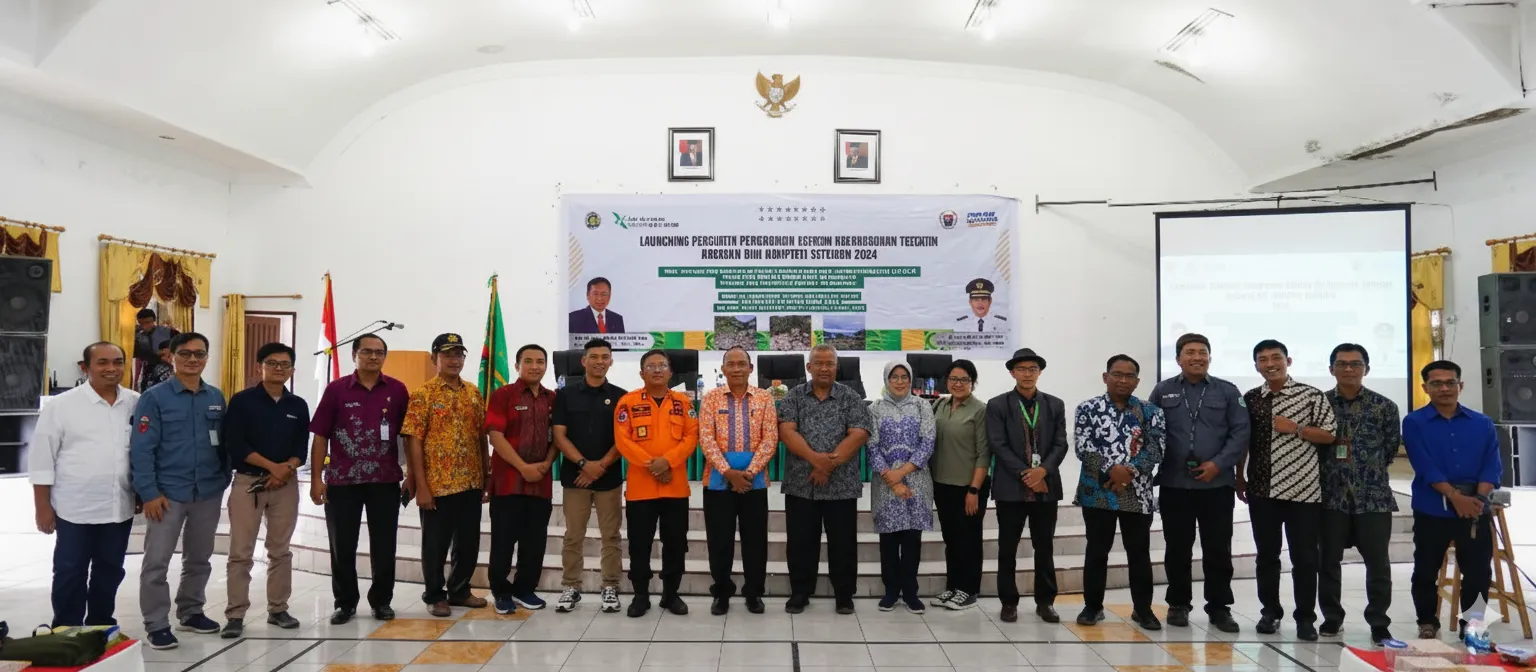
USU informs and supports local and regional governments in early warning, monitoring, and response planning for climate-related disasters by providing research-based insights, technical guidance, and platforms for knowledge exchange. In 2024, through the Faculty of Forestry and the Research Center for Disaster Mitigation, the university organised a regional workshop on “Integrated Early Warning Systems for Climate-Induced Disasters in North Sumatra.” The event brought together representatives from the Regional Disaster Management Agency (BPBD), regional development planning offices (Bappeda), and academic experts to discuss data-driven approaches to monitoring floods, peatland fires, and ecosystem vulnerability. During the workshop, USU researchers presented models for risk mapping and environmental forecasting that are now being used to strengthen local disaster-preparedness measures and community alert systems. These collaborations underline USU’s leadership in advancing regional resilience and more effective early warning mechanisms.
A key example of USU’s cooperative planning is the Faculty of Forestry’s involvement in the GIZ-SUPA Project (Sustainable Use of Peatland and Haze Mitigation in ASEAN). In partnership with the Indonesian Ministry of Environment and Forestry (KLHK), the University of Syiah Kuala, and GIZ (German Development Cooperation), USU contributed scientific input to the finalisation of Regional Spatial Plans (RPPEG) for Aceh Barat and Nagan Raya. The collaboration focuses on improved peatland management as a critical instrument for reducing haze, preventing land degradation, and addressing the broader social risks of displacement and migration triggered by climate-related disasters. By promoting sustainable land-use planning in peat ecosystems, the initiative strengthens regional resilience while enhancing long-term adaptation capacity and helping local authorities integrate climate risk into development decisions.
Beyond peatland governance and early warning workshops, USU’s community-service and research programmes carry out risk mapping, environmental and climate modelling, and ecosystem-service assessments that generate essential data for climate-risk monitoring and early-warning systems. Academic teams work closely with provincial and district governments to identify high-risk zones, analyse trends in environmental change, and evaluate ecosystem functions that support livelihoods, infrastructure, and urban systems. These scientific inputs inform local policy frameworks, guide the integration of environmental risk into spatial-development plans, and support the design of emergency-response protocols that reflect both human and ecological vulnerabilities.
Rector of Universitas Sumatera Utara, Professor Dr. Muryanto Amin, S.Sos., M.Si., has underscored that collaboration between universities and government agencies is essential to reducing disaster risks in a warming climate. By contributing applied research, technical assistance, and structured dialogue with policymakers, USU helps shape evidence-based policies that protect communities and natural resources. These efforts are aligned with the university’s sustainability governance under Rector’s Regulation Number 3 of 2019 on the Implementation of the Green Campus Movement and Circular Letter Number 1 of 2023 on Environmental Management and the Commitment to Achieve Carbon Neutrality by 2029. Through its sustained engagement in early warning, climate-risk monitoring, peatland management, and spatial-planning support, Universitas Sumatera Utara reinforces Indonesia’s capacity for disaster resilience, sustainable land management, and climate-driven risk reduction—demonstrating how a public university can serve as both a knowledge hub and a practical partner in building climate-resilient regions.