


Medan, (July 25, 2024) — Universitas Sumatera Utara (USU) is broadening its footprint in public health by coupling local service delivery with national research and international partnerships designed to translate evidence into better health outcomes. The university’s approach links education, research, and community service so that what is learned in laboratories and classrooms informs frontline practice—while challenges encountered in clinics and neighborhoods shape research agendas and policy engagement.
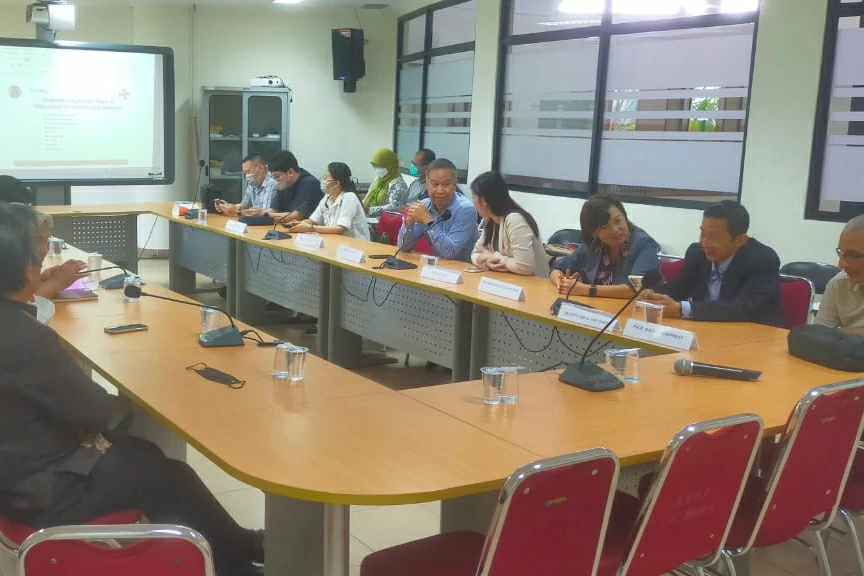
At the local and regional levels, USU works closely with the North Sumatra Provincial Health Office and the Medan City Health Office to implement public‑health programs across 48 subdistricts. In 2024, these activities engaged approximately 1,200 students and 220 faculty members in immunization drives, stunting‑prevention campaigns, and nutrition‑improvement initiatives. The joint programs serve two purposes: they deliver essential services to underserved communities and provide structured clinical and field education for students in medicine, public health, nursing, and allied disciplines. By embedding student placements within local health priorities, the university helps expand service coverage while cultivating a workforce trained in prevention, early detection, and patient‑centered care.
 USU’s national collaborations deepen this practice‑based model with a strong research pipeline. The university partners with the Ministry of Health, the National Research and Innovation Agency (BRIN), the National Agency of Drug and Food Control (BPOM), and the Indonesian Medical Association (IDI) on 15 multicentre studies that aim to expand the evidence base for public‑health decision‑making. Among these efforts is a BRIN‑funded project worth Rp 3.2 billion to develop rapid diagnostic tools for dengue and leptospirosis—two infectious diseases of high public‑health concern in Indonesia. Faster and more reliable diagnostics are expected, in time, to support earlier case identification, improve clinical management, and inform surveillance systems. Taken together, the multicentre portfolio strengthens Indonesia’s research capacity and advances evidence‑based policy formulation at scale.
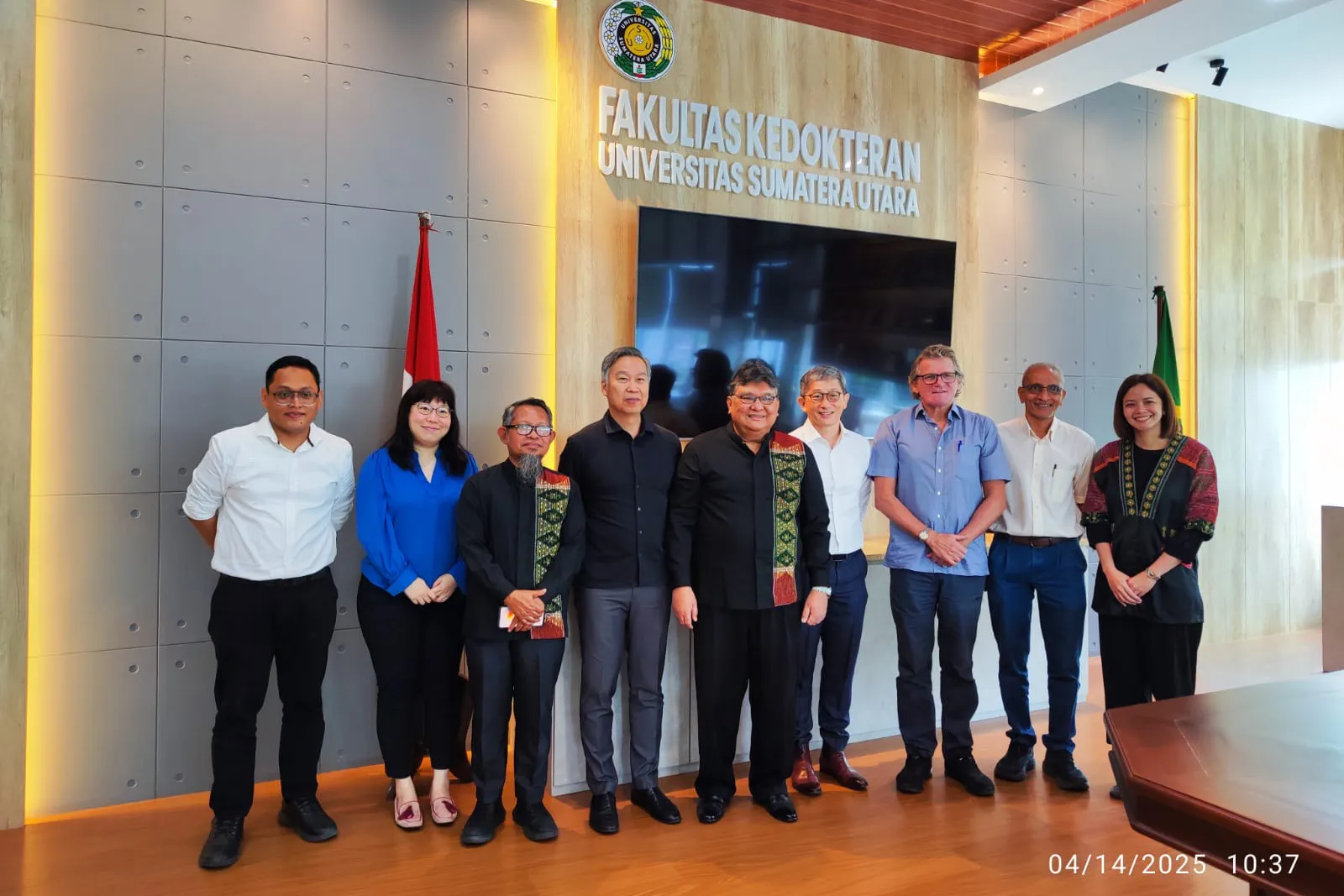
USU’s global orientation complements its local mandate. The university maintains strategic ties with the World Health Organization (WHO), SingHealth Duke‑NUS Global Health Institute, Universiti Sains Malaysia, Chulalongkorn University, Niigata University, and the Southeast Asia One Health University Network (SEAOHUN). Through these partnerships, USU contributes to pandemic preparedness planning, zoonotic‑disease surveillance, and competency‑based education and training in global health. Faculty exchanges, co‑taught modules, and joint simulation exercises expose students and clinicians to international best practices while adapting them to regional realities. The emphasis on One Health—recognizing the interdependence of human, animal, and environmental health—supports cross‑sector approaches to outbreak risk, antimicrobial resistance, and food‑borne illness.
 Clinical service remains a cornerstone of USU’s public‑health mission. Through RS USU and RSGM USU, the university provides more than 10,000 outpatient visits each month. These teaching facilities integrate patient care with research and education, creating a continuous feedback loop in which service delivery informs study design and training curricula, and research findings are translated into updated protocols and community guidance. The scale of clinical encounters enables USU to extend equitable access, particularly for groups that face geographic or financial barriers to care, while generating anonymized operational data that can support quality‑improvement initiatives.
What distinguishes USU’s model is the deliberate coupling of scale and integration. Local programs are coordinated to align with health‑office priorities, student rotations are mapped to competencies and population needs, and national research projects are selected for their relevance to pressing public‑health questions. International partnerships, in turn, supply technical expertise, comparative perspectives, and opportunities for joint publications and training. This architecture spreads the benefits in multiple directions: communities gain broader access to preventive and primary care; students acquire field‑tested skills and a public‑service ethos; and policymakers receive timely evidence to guide resource allocation and program design.
The cumulative effect is a platform that links neighborhood clinics to regional health offices, research consortia, and global knowledge networks. By mobilizing 1,200 students and 220 faculty members across 48 subdistricts, coordinating 15 multicentre studies with national agencies, and sustaining more than 10,000 monthly outpatient visits through RS USU and RSGM USU, the university demonstrates how an academic institution can operate as a catalyst for system‑level improvement. As partnerships with WHO, SEAOHUN, and leading universities continue to mature, USU is positioned to expand its contributions to pandemic preparedness, zoonotic‑disease monitoring, and high‑quality training for the next generation of health professionals.
USU’s expanded collaborations illustrate a pragmatic pathway for universities seeking to align teaching and research with measurable community impact. By pairing service with science and local insight with international cooperation, the university helps ensure that equitable access and stronger health systems advance in tandem—across North Sumatra and, increasingly, across borders.