


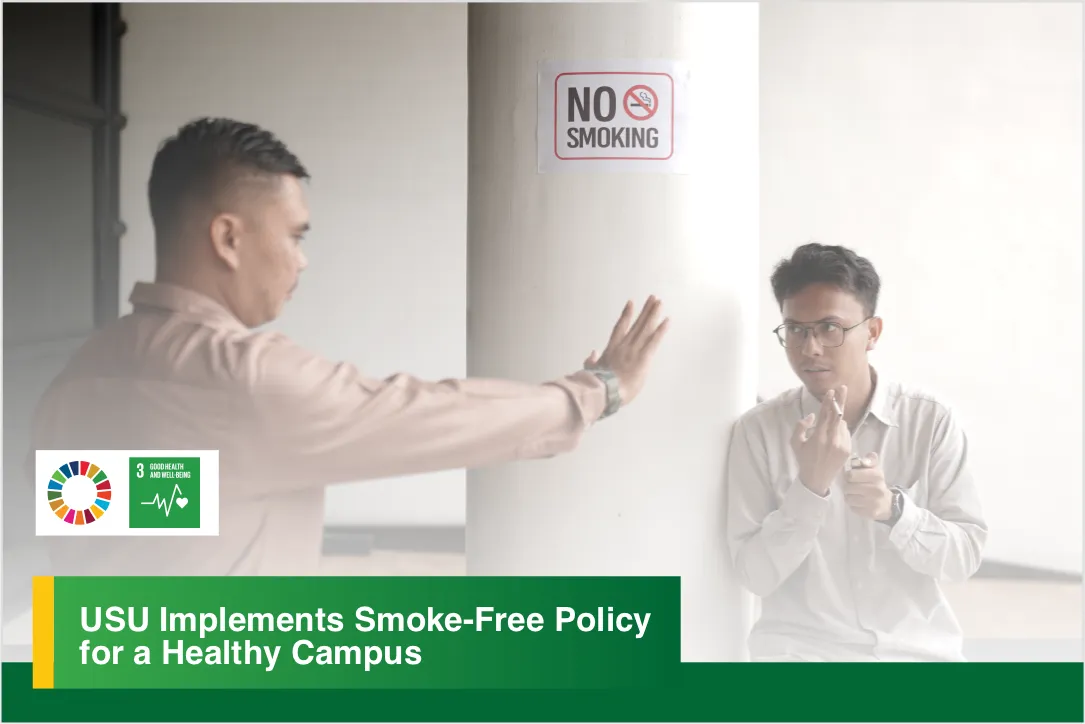
Medan, (November 18, 2024) — Universitas Sumatera Utara (USU) reaffirmed its campus‑wide Smoke‑Free Policy (Kawasan Tanpa Rokok) in conjunction with Indonesia’s National Health Day, underscoring a prevention‑first approach that couples health education with accessible cessation support. The policy forms part of USU’s broader Healthy Campus agenda, positioning the university as a partner to public‑health authorities in reducing tobacco‑related harm while cultivating an environment conducive to learning and well‑being.
The policy’s origins trace back to the Faculty of Public Health, which in 2016 issued Dean’s Decree Number 4437/UN5.2.1.10/SK/TPM/2016 establishing a smoke‑free zone, a monitoring mechanism, and continuous health‑promotion activities within faculty grounds. Building on that pilot, the commitment expanded university‑wide through Rector’s Circular Letter Number 14904/UN5.1.R/KPM/2022, creating a common framework for all units and ensuring that smoke‑free norms are applied consistently across academic and non‑academic spaces. By rooting behavioral expectations in explicit institutional instruments, USU aligns campus practice with national health priorities and international evidence on the benefits of smoke‑free learning environments.

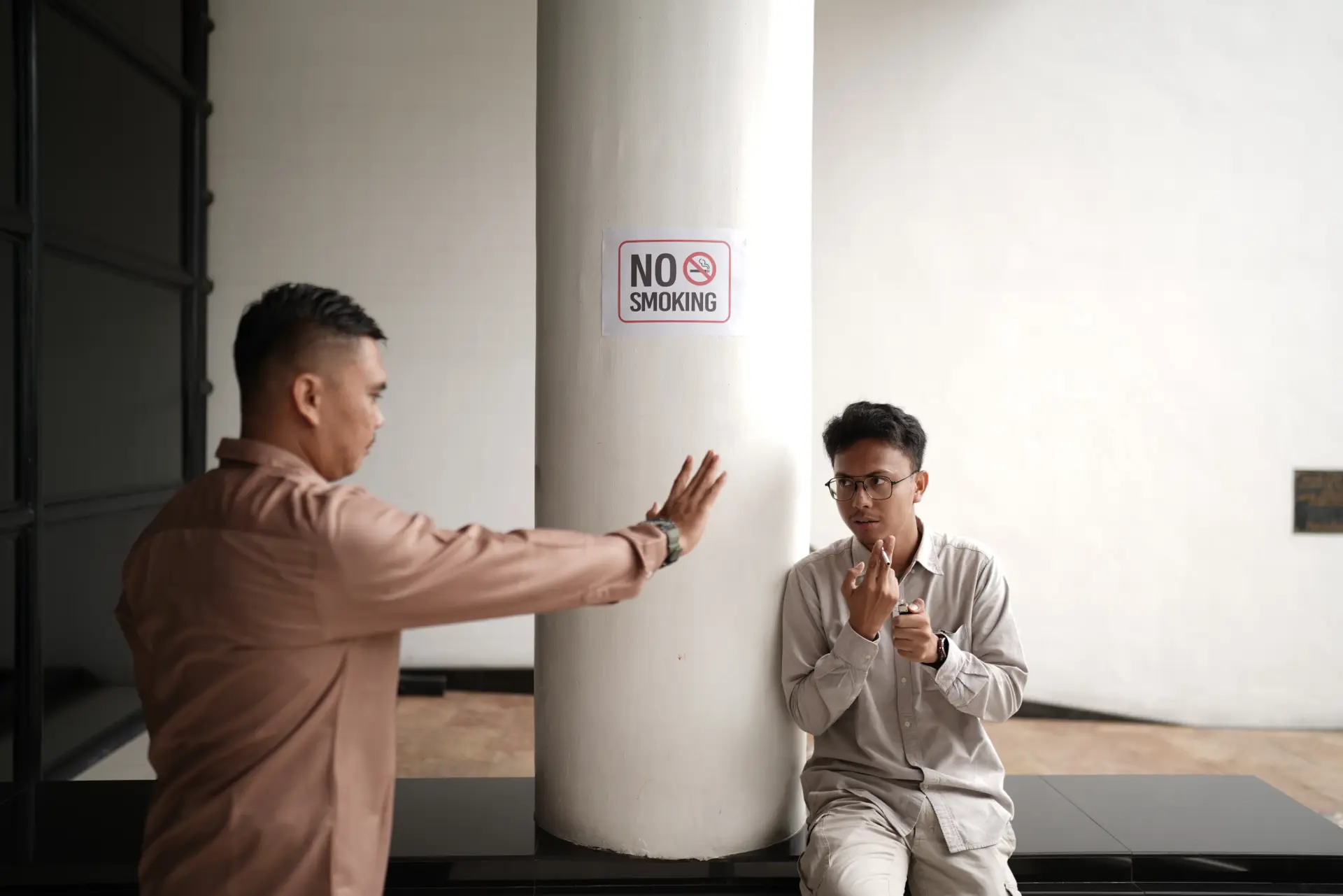
Scope and compliance are clearly defined. Smoking is prohibited in classrooms, laboratories, lecture halls, student dormitories, the Integrated Research Laboratory, and surrounding green spaces. By late 2024, the Faculties of Public Health, Nursing, and Pharmacy reinforced implementation through standardized signage and faculty‑led monitoring teams, offering reminders, directing individuals to cessation resources, and addressing infractions in a manner consistent with educational values. The emphasis is on shaping norms—reducing second‑hand smoke exposure and litter—while supporting those who choose to quit.
Health promotion remains central to the strategy. From August to November 2024, USU and the Green Campus Team coordinated a series of campaigns—“Smoke Free Universitas Sumatera Utara” and “Healthy Without Smoking”—that combined seminars, exhibitions, fun walks, and student poster contests. More than 2,500 students and staff took part, reflecting steady demand for practical guidance on tobacco risks, nicotine dependence, and effective quit strategies. The programming also highlighted environmental co‑benefits: cleaner air in shared spaces, fewer cigarette butts in drainage systems, and greener campus grounds that reinforce positive behavior.
To translate advocacy into individual support, USU provides free cessation services at the Universitas Sumatera Utara Polyclinic and the Psychology Service Clinic under the Faculty of Psychology. Students and staff can access confidential counselling for nicotine‑withdrawal management, behavioral therapy, and mental‑health guidance tailored to stressors that often accompany attempts to quit. Where needed, clinicians coordinate care plans that combine brief interventions with follow‑up sessions, helping participants maintain progress through examination periods and other high‑pressure times in the academic calendar.
Student engagement is treated as a driver of culture change. The university invites students to serve as agents of change—modeling smoke‑free habits, sharing accurate information in peer networks, and extending healthy practices into families and neighborhoods. This orientation reflects USU’s preference for education, empowerment, and personal responsibility over punitive enforcement. By pairing clear rules with supportive services and visible role models, the university aims to embed a durable smoke‑free culture that outlasts any single campaign.

Implementation is supported by practical governance tools. Standardized signage clarifies expectations at entry points and high‑traffic locations; faculty monitoring teams provide friendly compliance checks and route individuals to cessation resources; and campaign organizers gather feedback to refine messages, schedules, and outreach channels. Together, these measures help maintain policy fidelity while keeping the focus on health outcomes—reduced exposure to tobacco smoke, safer and cleaner shared spaces, and easier access to help for those who wish to quit.
USU situates the policy within its commitment to Sustainable Development Goal 3 (Good Health and Well‑Being) and to a campus environment that integrates education, research, and service. A smoke‑free setting protects non‑smokers, assists smokers who are ready to quit, and signals institutional care for the physical spaces where learning occurs. As the Healthy Campus program continues to mature, USU’s approach demonstrates that effective smoke‑free policies work best when they combine clear, campus‑wide standards with practical, stigma‑free support—turning health intent into everyday practice and advancing a culture of well‑being across the university community.
