


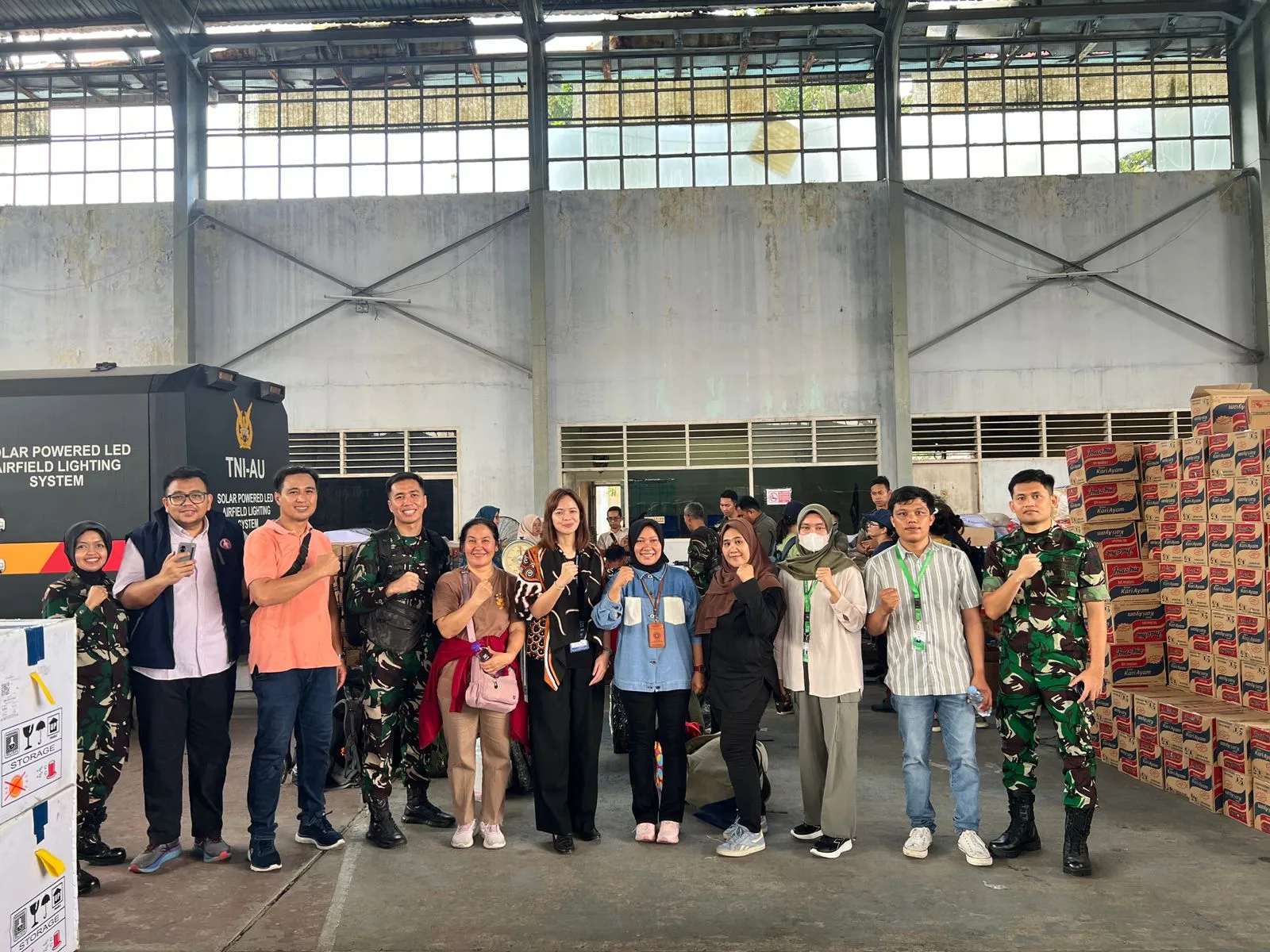
A Province in Crisis and a Community in Motion
Flooding has forced thousands of residents to evacuate their homes in Medan, Langkat, Tapanuli Tengah, Tapanuli Selatan, Sibolga, and beyond. In many areas, clean water supplies remain unstable, public kitchens have not fully reopened, and health risks continue to rise in crowded shelters.
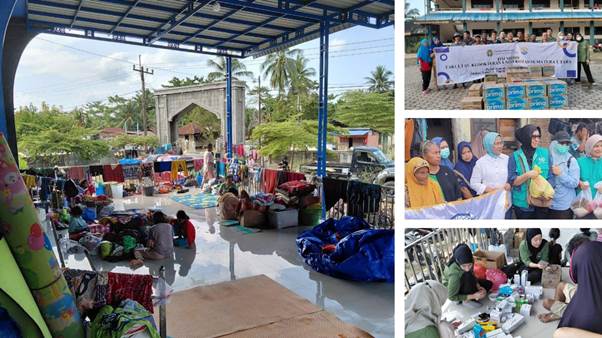
At USU’s humanitarian command post, located at the former Bank Sumut Building (Gate 3 of the campus), volunteers work every day sorting and preparing donations such as food staples, proper clothing, medicines, baby and elderly supplies, blankets, hygiene kits, and drinking water. The continuous flow of community contributions reflects the collective spirit and empathy shared by the USU community and the wider public.
Medical Teams on the Frontlines
The Faculty of Medicine has led emergency health operations by deploying mobile medical units to evacuation centers and flood-affected neighborhoods across the province. Doctors and health workers report an increasing number of patients suffering from respiratory infections, skin diseases, diarrhea, dehydration, and worsening chronic conditions.
Rapid field assessments conducted in Sibolga and Tapanuli Tengah also revealed that several remote villages, such as Tukak Atas, Hutonabolon, Sipangek, Ajoran, and Bonalumban, remain extremely difficult to access by land because of collapsed routes and landslides. These findings underscore the urgent need for air-supported operations, temporary field hospitals, and sustained rotation of medical teams.
Airlifted Aid and University-Wide Volunteers Depart for Sibolga
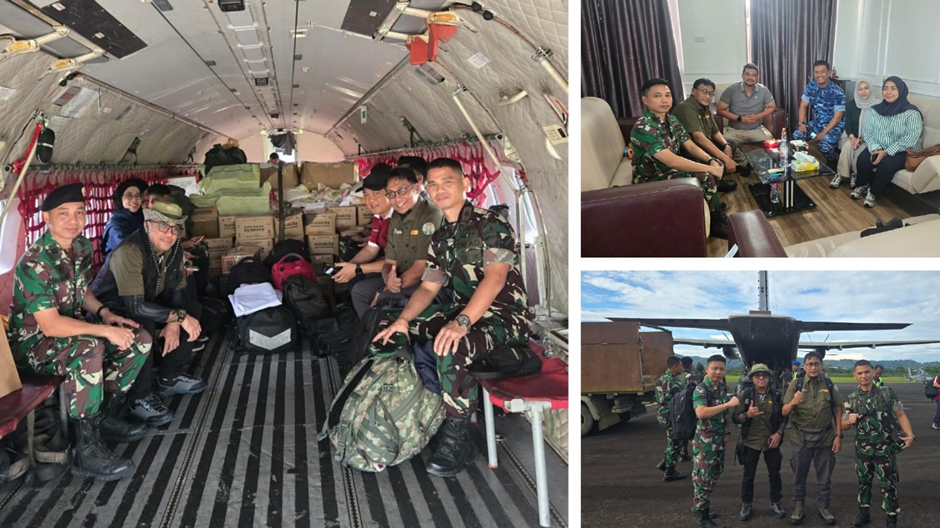
On 5 December 2025, USU reached another crucial phase in its emergency response. Under the coordination of the Vice Rector for Academic Affairs (WR I) and the Vice Rector for Student Affairs and Community Service (WR III), USU dispatched a major airlifted humanitarian mission to Sibolga and other severely affected regions. This deployment was carried out in collaboration with the Deputy Minister of Higher Education, Science, and Technology of the Republic of Indonesia.
Alongside the aid packages, USU also deployed a new cohort of volunteers drawn from multiple faculties across the university. These volunteers include medical teams from the Faculty of Medicine, public health students, engineering volunteers, psychology and social welfare students, disaster-management task groups, and other faculty-based emergency units. Their diverse skills reflect USU’s commitment to offering not only medical support but also psychosocial assistance, logistical coordination, field assessment, and community engagement.
The aircraft brought essential supplies, including medicines, nutritional support, baby formula, adult diapers, emergency food packs, and equipment for setting up health posts. Volunteers boarded with a unified purpose: to reinforce the earlier teams already stationed in the field and to reach communities still waiting for assistance. At the airbase, the atmosphere was filled with determination as teams prepared to serve remote villages that are currently accessible only through aerial routes.
Hope, Presence, and Long-Term Commitment
For survivors in shelters and remote areas, the arrival of USU teams represents more than logistical aid. It brings reassurance, human presence, and a restored sense of security. Community leaders often express relief knowing that help continues to arrive, backed by the expertise and commitment of an institution that is deeply rooted in the region.
USU has reaffirmed that its contribution will not stop at immediate relief. The university continues to work closely with BNPB, TNI, local governments, medical associations, and community partners to establish temporary medical facilities, reconstruct access routes, stabilize essential services, and plan long-term recovery strategies.
As North Sumatra begins the long journey toward recovery, USU remains committed to standing alongside affected communities, guided by compassion, scientific knowledge, and a strong sense of responsibility to serve.
Tags : SDG 3, Good Health and Well-being, SDG 11, Sustainable Cities and Communities, SDG 13, Climate Action, SDG 17, Partnerships for the goals